[render_menu Professionnels]
[render_menu "Service client"]
[render_menu "En savoir plus"]
Troubleshooting
Installation
Usage

The concept of heating and cooling stages is fundamental to understanding how modern central HVAC systems operate, especially those using a heat pump.
The concept of heating and cooling stages is fundamental to understanding how modern central HVAC systems operate, especially those using a heat pump.
In residential central HVAC systems, there are generally two main types of systems.
This is the simplest type of system. It has only one operating speed and one heating or cooling source.
Example: a conventional gas furnace.
When the thermostat detects that the temperature is too low, it signals the furnace to run at 100% capacity until the desired temperature is reached.
The operation is simple: either fully on or fully off.
Les systèmes multistages sont conçus pour offrir un meilleur confort et une meilleure efficacité énergétique.
Ils disposent de plusieurs niveaux de puissance pour le chauffage ou la climatisation.
The first floor is the primary source of heating or cooling.
It usually operates at reduced capacity (approximately 60% to 70%) .
Purpose:
Maintain a consistent indoor temperature
Improve comfort by reducing temperature swings
Lower energy consumption
Under most weather conditions, the system will operate only at this first stage.
The second stage activates only when the first stage cannot maintain the desired temperature, typically when outdoor temperatures are very low.
Purpose:
Outdoor temperature is very low
A rapid increase in temperature is necessary
Purpose:
Provide additional heating or cooling capacity
Activate a supplementary (auxiliary) heat source
Summary
| Function | Stage | Heating/Cooling source | When is it used? |
| Heating | 1st stage | The heat pump itself. | Moderate outdoor temperatures (e.g., above 0 °C / 32 °F). |
| Heating | 2nd stage (Auxiliary) | Electric heating elements or backup furnace | When the outdoor temperature is very low (e.g., below −10 °C / 14 °F), the heat pump becomes ineffective. |
| Cooling | 1st stage | Heat pump in cooling mode | Warm weather or at the beginning of the cooling cycle |
| Cooling | 2nd stage | Full compressor capacity | Very hot weather or when rapid cooling is required |
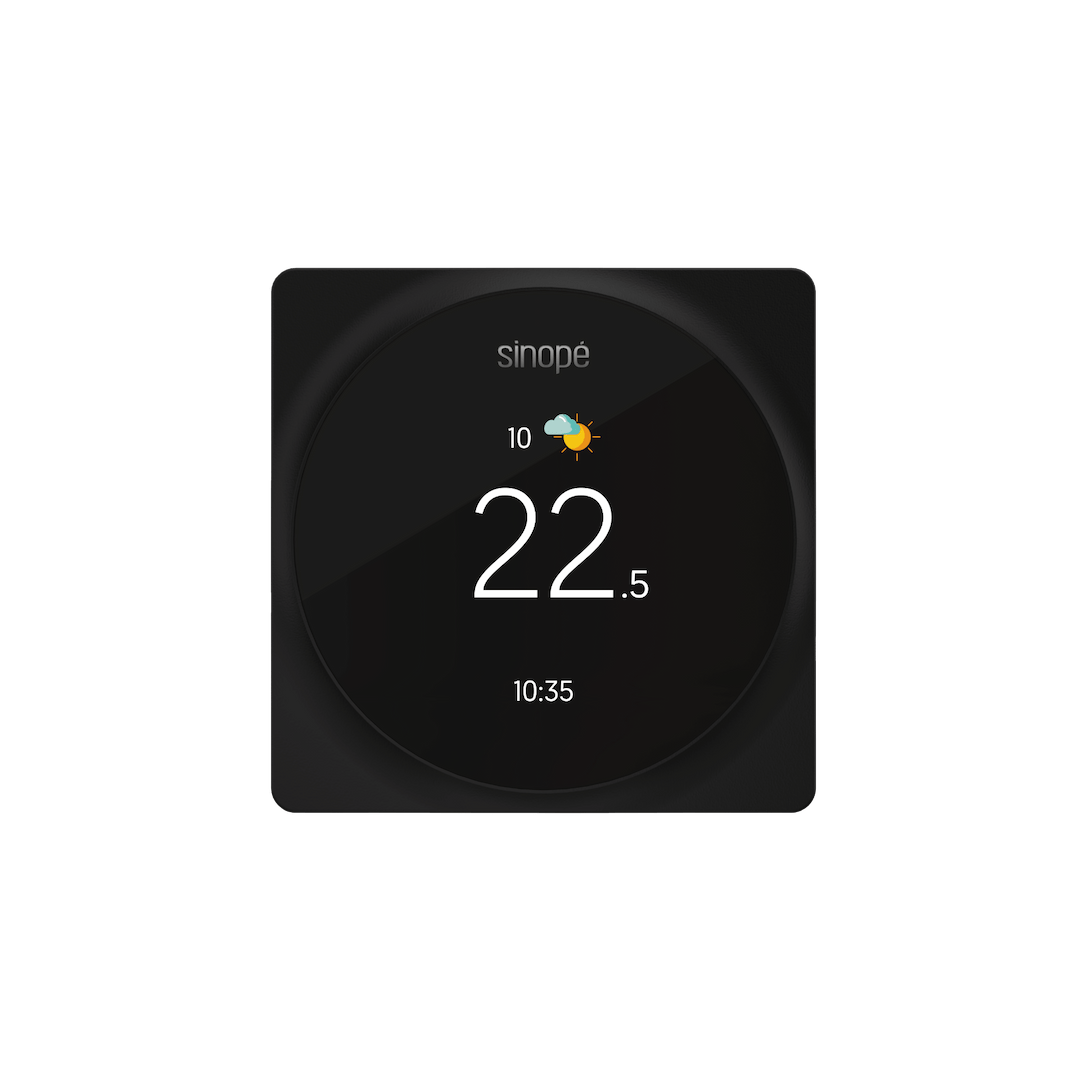
To ensure that the thermostat is compatible with your current installation, you must first validate your system’s current connections and verify that they are compatible with the thermostat.
Click here to check your compatibility by using our online tool.